.jpg)
1. Recognition
How are the Rohingya defined? Does the State recognise their name and identity? What effects does citizenship law produce?
MINORITIES AROUND THE WORLD · 02 · MYANMAR / BANGLADESH
United Nations reports provide a lens through which to examine identity, statelessness, conflict, participation and international responsibility.
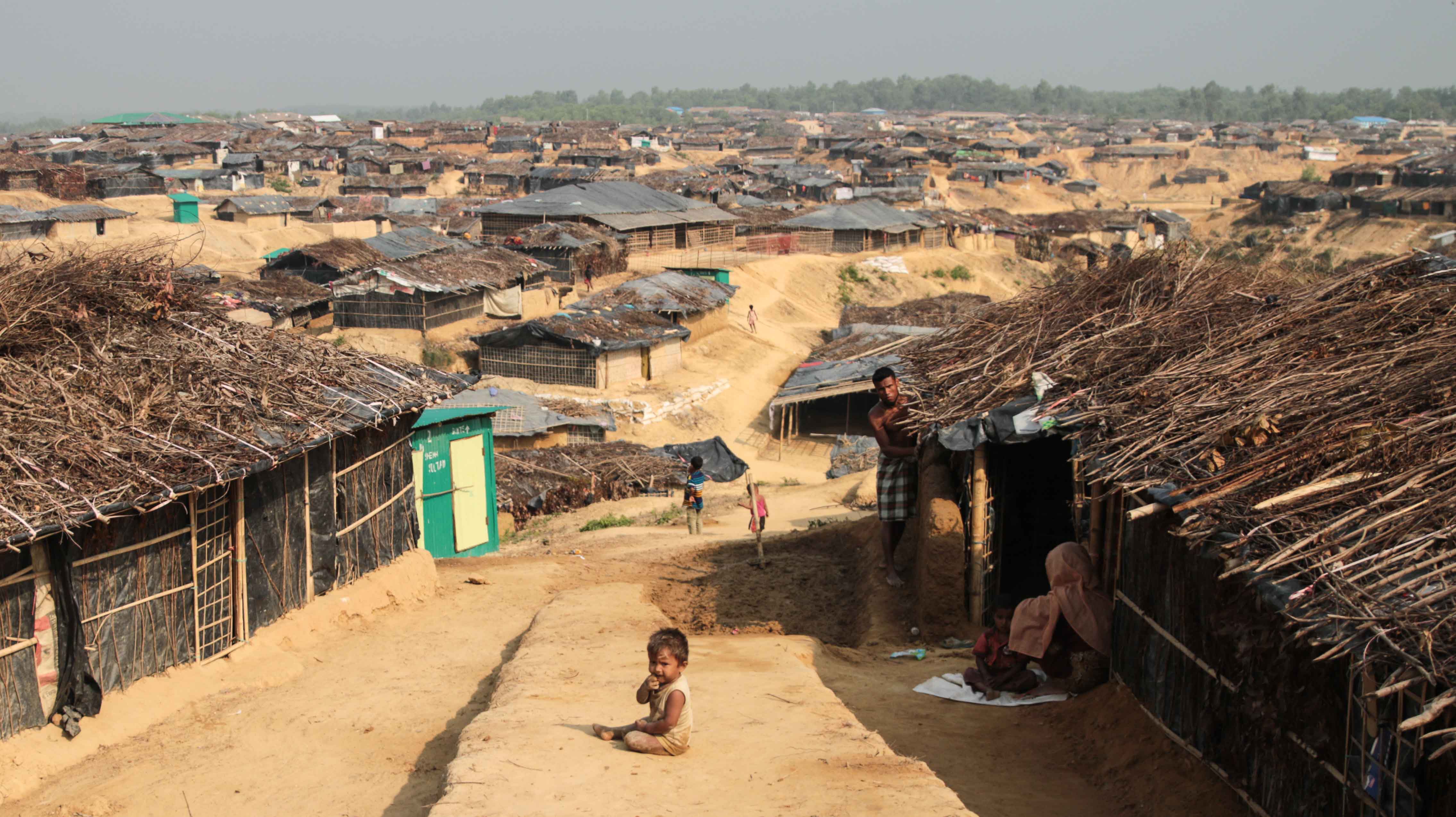
On 29 August 2025, the United Nations High Commissioner for Human Rights presented a report on the situation of the Rohingya and other minorities in Myanmar. It does more than describe a humanitarian crisis. It shows what happens when a population is progressively separated from legal recognition, freedom of movement, land, services and the ability to participate in decisions affecting it.
The question running through this second chapter of Minorities Around the World extends beyond Myanmar: what remains of a right when the person entitled to exercise it is not recognised as a citizen, cannot use the name they claim and lacks safe conditions for returning home?
THE INSTITUTIONAL SOURCE
“Rohingya” is not only the name of a population. It is also a site of political and institutional conflict. The identity claimed by individuals is frequently disputed or replaced by labels imposed from outside. Denying a name does not erase a population, but it can weaken its ability to be recognised as a rights-holder, organise, preserve memory and seek protection.
The Observatory therefore applies a clear principle: belonging must not be inferred from appearance, religion, language, place of birth or residence. Voluntary self-identification must be considered alongside historical, territorial and social evidence without turning identity into profiling.
The Rohingya situation is often described through the term “statelessness”: not being considered a national by any State under the operation of its law. Its consequences are not merely formal. They may affect freedom of movement, education, health care, employment, birth registration, property, voting and equal access to institutions.
United Nations resolutions repeatedly address the impact of Myanmar’s 1982 Citizenship Law. A person may be physically present in their own country while being placed at the edge of its legal order. Administrative exclusion can prepare and reinforce territorial, economic, political and narrative exclusion.
A minority is not protected merely when it is allowed to survive. It is protected when it can be recognised, participate and build its future without surrendering its name, safety or dignity.
In 2017, more than 750,000 Rohingya fled Myanmar for Bangladesh following military operations in Rakhine State. That exodus did not end the crisis. After the 2021 military coup, conflict expanded and fragmented. Rohingya in Rakhine have remained exposed to actions by the Myanmar military, the Arakan Army and Rohingya armed groups.
OHCHR reporting covering 2025 describes serious abuses including killings, disappearances, torture, arbitrary detention, property destruction and forced recruitment. Restrictions on communications and humanitarian access make verification difficult and require caution when attributing responsibility. Civilian protection, however, does not depend on the identity of the perpetrator: every party must be assessed according to documented conduct and applicable standards.
Bangladesh hosts the largest Rohingya refugee population. According to UNHCR, nearly 1.2 million Rohingya refugees from Myanmar were in the country by the end of 2025. The recorded increase included arrivals during 2024 and 2025, newly registered people and children born to families already present.
The 2025–2026 Joint Response Plan of the Government of Bangladesh, the United Nations and partner organisations addresses both refugees and host communities. Temporary protection, however, cannot replace a political solution. Return is an option only when it is voluntary, safe, dignified and sustainable. Moving a person across a border is insufficient: citizenship, security, freedom of movement, essential services and guarantees against renewed persecution are also required.
How are the Rohingya defined? Does the State recognise their name and identity? What effects does citizenship law produce?
Do authorities and armed actors prevent abuses and protect civilians?
Can Rohingya people influence decisions on return, camps, assistance and justice?
Do Rohingya speak in their own voices, or appear only as numbers, victims or aid recipients?
The possibility of return also depends on what happened to the places from which people were expelled. The Independent Investigative Mechanism for Myanmar has examined the destruction and appropriation of Rohingya homes, land, mosques and other property during the 2017 operations, using witness accounts, geospatial imagery, video and official records.
Destroying a home does not only mean losing a building. It may erase proof of residence, livelihoods, family archives, religious sites and the practical possibility of return. Return therefore cannot be separated from restitution, property documentation and guarantees against renewed seizure.
Different international processes address the Rohingya situation. The Independent Investigative Mechanism collects and analyses evidence; the International Court of Justice is considering proceedings brought by The Gambia against Myanmar under the Genocide Convention; the International Criminal Court has jurisdiction over certain alleged crimes connected with deportation into Bangladesh; national proceedings have also invoked universal jurisdiction.
These processes have distinct mandates, evidentiary standards and functions. They must not be confused or described as having already delivered final determinations concerning every act or individual responsibility. Documentation protects evidence and memory; it does not prejudge the courts.
Discrimination, statelessness, poverty, dependence on aid, movement restrictions and gender-based violence can reinforce one another. Participation may also be unequal: consulting “the community” in general does not ensure that women, young and older people, persons with disabilities or those outside the most visible organisations are heard.
A rights-based approach must therefore ask not only whether the Rohingya are consulted, but who can actually participate and who remains excluded within the minority itself.
The Rohingya diaspora documents events, preserves memory, conducts research and advocacy and supports families. Distance does not erase a connection with the place of origin or make testimony irrelevant. The diaspora is not a single voice, however: political positions, migration experiences and relationships with people in Myanmar or the camps vary.
Residence abroad alone must therefore not exclude a person from being heard. The type of contribution, connection to the issue, any formal mandate and the limits of representativeness should instead be made explicit.
The Rohingya crisis demonstrates that return is not merely logistical and citizenship is not merely a document. Return means being able to live without persecution, move, work, study, practise religion, take part in decisions and rebuild a relationship with the land. It also means being able to use one’s own name without turning that name into a ground for exclusion.
A minority should not become visible only when its members flee, cross the sea or appear before a court. The quality of a legal and political order is also measured by its ability to recognise a minority before protection becomes an emergency.
Mission · Methodology · External resources · Dossier standard · Italian